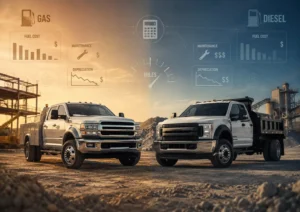
Buying a truck is not only about choosing a model, engine, or trim. It is also a long-term financial decision.
A new truck gives you full warranty protection, the latest safety technology, fewer concerns about previous use, and greater control over the configuration. A used truck usually comes with a lower purchase price, a smaller loan, slower depreciation, and potentially lower insurance costs.
So, which one saves more money long-term?
For many budget-conscious buyers, a well-maintained used truck offers the lower total cost of ownership because its previous owner has already absorbed a substantial portion of the early depreciation. However, a used truck is not automatically the better deal. Hidden mechanical problems, expensive financing, poor fuel economy, or commercial downtime can quickly reduce the initial savings.
Similarly, a new truck is not always financially wasteful. Promotional financing, warranty coverage, greater reliability, and several years of predictable maintenance can make new ownership worthwhile for certain personal and commercial buyers.
The right way to compare new vs. used trucks is to calculate the complete ownership cost rather than just the sticker price. That means looking at the purchase price, the down payment, financing charges, insurance, registration and taxes, depreciation, fuel, maintenance, repairs, warranty coverage, resale value, and, for business buyers, downtime.
This guide examines each of these costs so you can decide whether a new or used truck fits your budget, workload, and ownership plans. If you’d rather start comparing real trucks right away, browse our new and used truck inventory.

Is It Better to Buy a New or Used Truck?
A used truck will often save more money over five years because it costs less upfront and has already passed through part of its steepest depreciation period.
A new truck may still provide better value if you qualify for low promotional financing, need a precise towing or payload configuration, use the truck daily for income-producing work, or simply cannot afford unexpected downtime. It also makes sense if you want full factory warranty protection, plan to keep the truck for many years, or need the latest driver-assistance features.
A used truck tends to provide better value if your main goal is a lower purchase price and a smaller loan, or if you can pay cash without draining your savings. It’s also the stronger option when you can find a truck with complete maintenance records, arrange an independent mechanical inspection, keep money set aside for repairs, and don’t need the newest technology.
A truck that is approximately three to five years old may offer an attractive balance of lower depreciation, useful remaining life, modern features, and manageable mileage. Consumer Reports similarly recommends considering a truck that is only a few years old because it has already absorbed a significant depreciation hit while potentially retaining much of its useful life.
New vs. Used Trucks at a Glance
| Cost Factor | New Truck | Used Truck |
| Purchase price | Higher | Lower |
| Down payment | Larger | Smaller |
| Interest rate | Usually lower | Usually higher |
| Insurance | Higher | Lower |
| Sales tax | Higher | Lower |
| First-year depreciation | Steepest | Already absorbed |
| Warranty | Full factory coverage | Partial or none unless certified |
| Maintenance (years 1-3) | Low | Moderate to higher |
| Repair risk | Low | Higher, varies by history |
| Latest safety tech | Yes | Depends on model year |
| Best for | Long-term owners, businesses needing uptime | Budget-focused buyers, cash buyers |
Understanding the Total Cost of Truck Ownership
The sticker price is only one part of what a truck costs.
Total cost of ownership measures how much money you spend from the day you purchase the truck until the day you sell, trade, or retire it. A useful way to think about it is: total ownership cost equals purchase and financing costs, plus operating expenses, minus resale value.
Purchase and financing costs cover the agreed vehicle price, sales tax, registration, dealer charges, loan interest, and financing fees. Operating expenses cover insurance, fuel, maintenance, repairs, tires, towing, rental vehicles if the truck is ever down for service, and any lost business income while it’s off the road.
AAA’s 2025 ownership analysis estimated that the average cost of owning and operating a new vehicle was $11,577 per year. Its calculation included fuel, maintenance, repairs, tires, insurance, registration, taxes, depreciation, and financing. Actual costs vary by vehicle type, mileage, driving conditions, and location.
This is why buyers should never compare trucks using monthly payments alone.
Upfront Costs: New vs. Used Trucks
New-Truck Purchase Price
New trucks generally cost more because they have no previous mileage, include full factory warranty coverage, and offer the latest equipment.
Truck prices vary widely by size and specification. Consumer Reports notes that many well-equipped four-wheel-drive, crew-cab full-size trucks fall between approximately $50,000 and $65,000, while premium versions can exceed $80,000. Heavy-duty diesel trucks can cost even more.
The final price is shaped by cab size, bed length, engine, drivetrain, axle ratio, towing package, payload package, technology, interior trim, and any dealer-installed accessories. A buyer who only looks at the advertised base price may end up paying considerably more once the equipment needed for work, towing, or family use is added. Browsing current new trucks for sale is the easiest way to see real, out-the-door pricing instead of guessing from a base MSRP.
Used-Truck Purchase Price
Used trucks normally cost less because age, mileage, previous ownership, and depreciation have reduced their market value.
A lower purchase price can help the buyer make a smaller down payment, borrow less money, reduce the monthly payment, pay less sales tax, preserve business capital, or step up into a higher trim within the same budget.
However, two trucks should only be compared when their specifications are reasonably similar. A two-wheel-drive regular cab should not be compared directly with a four-wheel-drive crew cab equipped with a larger engine, longer bed, and towing package. Engine, trim, mileage, condition, and configuration can create major pricing differences. You can compare specs side by side across our full-size trucks and flatbed trucks inventory.
Down Payment and Negative Equity
A more expensive new truck may require a larger down payment to keep the monthly payment manageable.
Putting very little money down can create negative equity. This occurs when the outstanding loan balance is higher than the truck’s current market value. New-truck buyers face greater early negative-equity risk because depreciation can be sharp during the first few years. Consumer Reports warns that financing a new truck with a small down payment can leave the owner owing more than the truck is worth.
Used trucks may reduce this risk because the buyer starts with a lower purchase price and a slower depreciation curve. However, an overpriced used truck financed over a long period can also create negative equity.
Financing a New vs. Used Truck
New-Truck Loan Rates
New vehicles often qualify for lower interest rates because lenders view them as easier to value and less exposed to age-related mechanical risk. Manufacturers may also offer promotional annual percentage rates, cash rebates, loyalty incentives, trade-in assistance, special business financing, or deferred-payment promotions. A low manufacturer-supported rate can narrow the cost difference between a new and used truck.
Used-Truck Loan Rates
Used-vehicle loans often carry higher interest rates. Experian reported average first-quarter 2026 auto-loan rates of 6.39% for new vehicles and 11.43% for used vehicles. The rate offered to an individual buyer may vary substantially based on credit profile, loan length, down payment, lender, vehicle age, and amount financed.
Even with a higher interest rate, a used truck may still have a lower monthly payment because its purchase price and loan balance are smaller.
Compare the Total Amount Repaid
Before accepting either loan, compare the out-the-door price, down payment, APR, loan duration, monthly payment, total interest, loan fees, and the total amount you’ll repay by the end.
A 72- or 84-month loan may make an expensive truck appear affordable, but it can keep the buyer in debt for years and increase total interest. The best financing decision is not always the lowest monthly payment. It is the option that provides the lowest reasonable total cost without putting excessive pressure on the buyer’s cash flow. Our team can walk you through financing options for any truck in our inventory — just contact us.
Insurance, Registration, and Taxes
Insurance Costs
Used trucks often cost less to insure because their replacement value is lower. However, insurance premiums depend on much more than whether a truck is new or used. Insurers weigh driver age, driving history, ZIP code, personal or commercial use, annual mileage, truck value, engine and trim, theft risk, repair costs, safety equipment, coverage level, and deductible.
A financed truck will usually require comprehensive and collision coverage regardless of whether it is new or used. New trucks may also contain expensive cameras, sensors, adaptive lighting systems, and electronic modules. These features can improve safety, but they may increase collision-repair costs.
The most reliable method is to request insurance quotes for the exact trucks being considered.
Registration and Taxes
Registration rules vary by state, and fees may be influenced by vehicle value, vehicle age, weight, original MSRP, or commercial classification.
Sales tax is generally connected to the purchase price, so an expensive new truck may produce a larger tax bill. Commercial buyers may also need to consider weight-based registration, apportioned plates, permits, or other operating requirements.
New vs. Used Truck Depreciation
Why Depreciation Matters
Depreciation is the reduction in a truck’s market value over time.
It is one of the largest ownership expenses even though it does not appear as a regular monthly bill. AAA identifies depreciation as a major component of vehicle ownership cost. The loss becomes financially visible when the owner sells the truck, trades it in, totals it in an accident, or replaces it before paying off the loan.
How New Trucks Depreciate
New trucks normally lose value fastest during their early ownership years. The exact rate depends on model demand, manufacturer incentives, fuel prices, mileage, condition, new-model introductions, powertrain, regional market, and commercial demand.
Consumer Reports notes that depreciation can be significant during the first few years, although the rate can change based on market conditions, new model releases, and fuel prices.
How Used Trucks Depreciate
A used truck has already passed through at least part of its steepest value decline. It will continue depreciating, but the dollar loss may be lower because the buyer begins with a smaller vehicle value. This is one of the strongest reasons used trucks can produce lower long-term ownership costs.
Used trucks tend to retain value particularly well when they have desirable engines, four-wheel drive, practical cab and bed configurations, factory towing equipment, complete service history, low or moderate mileage, a clean title history, and strong market demand.
Depreciation Varies by Model
Not all trucks depreciate at the same rate. For example, Kelley Blue Book’s five-year estimate for a 2026 Ram 1500 includes approximately $20,815 in depreciation and a total five-year ownership cost of $62,968. That total includes fuel, insurance, financing, maintenance, repairs, state fees, and value loss. This is an estimate for a particular vehicle and should not be applied to every Ram 1500 or every truck.
Buyers should research the expected resale value of the exact model, engine, drivetrain, and trim under consideration. Checking recent listings in our used truck inventory can also give a real-world sense of how specific models are holding their value right now.
Maintenance and Repair Costs
New-Truck Maintenance
New trucks generally require fewer age-related repairs during their first years. Typical early maintenance is limited to oil and filter changes, tire rotations, fluid checks, cabin and engine filters, scheduled inspections, and occasional brake servicing. A new truck can still experience defects or recalls, but eligible repairs may be covered under the factory warranty.
Used-Truck Maintenance
Used trucks may require more immediate and ongoing maintenance because parts have already experienced age, mileage, heat cycles, towing, payload, and road use. That can mean tires, brake pads and rotors, a battery, belts and hoses, suspension components, wheel bearings, cooling-system repairs, transmission servicing, four-wheel-drive components, electrical repairs, or emissions equipment.
A used truck is not automatically unreliable. Maintenance history, previous workload, and mechanical condition are often more important than age alone. A well-maintained truck with higher mileage may be a better purchase than a newer truck that was overloaded, neglected, modified incorrectly, or repaired poorly.
Common Used-Truck Risks
A used truck may have been exposed to heavy towing, excessive payload, off-road use, commercial idling, poor maintenance, flood damage, accident damage, frame repairs, rust, unapproved modifications, or diesel-emissions tampering.
Consumer Reports recommends having any serious used-truck candidate inspected by a mechanic, with particular attention paid to signs of heavy towing, off-road use, or other extreme-duty operation. A proper pre-purchase inspection should cover a cold engine start, fluid condition, engine leaks, transmission operation, frame condition, suspension, brakes, tires, steering, the four-wheel-drive system, electrical equipment, warning lights, towing components, and a vehicle-history report.
The inspecting mechanic should be independent of the seller.
Warranty Coverage
New-Truck Warranty
New trucks normally include manufacturer-backed warranty protection for a specified number of years or miles. Coverage typically spans a bumper-to-bumper warranty, a powertrain warranty, corrosion protection, emissions coverage, and roadside assistance.
Terms vary by manufacturer, model, powertrain, and component, so buyers should read the actual warranty booklet rather than assuming every repair will be covered. Routine maintenance, wear items, misuse, modifications, and certain commercial applications may not be included.
Used-Truck Warranty
A lightly used truck may still have part of its original factory warranty. Before buying, confirm whether the warranty transfers, how much time and mileage remain, which components are covered, whether commercial use changes the coverage, and whether maintenance records are required to keep it valid.
Certified Pre-Owned Trucks
A certified pre-owned truck may provide a middle option between new and ordinary used inventory. Manufacturer-backed CPO programs typically involve vehicle-age and mileage limits, a multi-point inspection, vehicle-history screening, additional warranty coverage, roadside assistance, and sometimes special financing.
CPO trucks usually cost more than non-certified used trucks, but the extra inspection and warranty protection may reduce some buyer uncertainty. Certification does not eliminate the need to review the truck’s condition, history, and program terms. Our team can help you check which vehicles in our inventory come with extended warranty options — just reach out to us with the model you’re considering.
Fuel and Operating Costs
Fuel can become one of the largest operating expenses for high-mileage truck owners.
Newer versions of comparable trucks may benefit from more efficient engines, additional transmission gears, improved aerodynamics, cylinder-management systems, hybrid assistance, or updated engine controls. However, a newer truck is not automatically more fuel-efficient — fuel economy also depends on truck size, engine, drivetrain, axle ratio, tires, payload, towing, idling, terrain, and driving style.
Consumer Reports notes that pickup fuel economy varies considerably by truck size and powertrain. Its testing also shows that heavy-duty trucks generally consume more fuel, while smaller and hybrid pickups can be considerably more efficient.
Calculate Annual Fuel Cost
Use this formula: annual mileage divided by miles per gallon, multiplied by the fuel price.
For example: 15,000 miles ÷ 20 mpg × $3.50 = $2,625 per year.
At 16 mpg: 15,000 miles ÷ 16 mpg × $3.50 = $3,281.25 per year.
That is a difference of more than $650 per year. The more miles you drive, the more important fuel economy becomes in the new-versus-used decision.
Condition and Reliability
Advantages of a New Truck
A new truck generally comes with no previous ownership history, no previous mileage, and no known wear from towing or payload. It offers full warranty eligibility, predictable early maintenance, and current safety technology. It may still have recalls or manufacturing problems, but the buyer does not have to investigate how a previous owner treated it.
Risks of a Used Truck
Every used truck has a unique history, and its reliability depends on maintenance quality, previous use, mileage, repair history, accident history, modifications, storage conditions, and driving environment.
A clean-looking truck is not necessarily mechanically sound. Likewise, cosmetic wear does not always mean the truck has been poorly maintained. Inspection records and service history should carry more weight than appearance alone.
Features, Technology, and Safety
New trucks typically provide the latest comfort, towing, infotainment, and safety systems. Depending on the model, that can include automatic emergency braking, blind-spot monitoring, trailer blind-zone coverage, adaptive cruise control, lane-keeping assistance, surround-view cameras, trailer backup assistance, integrated trailer-brake controls, wireless phone integration, and digital instrument displays.
Consumer Reports recommends looking for key crash-avoidance technologies such as forward-collision warning, automatic emergency braking, blind-spot warning, and rear cross-traffic warning when buying either a new or used vehicle. A late-model used truck may include many of these features at a lower purchase price.
Technology should still be selected according to need. Expensive luxury and convenience packages can increase the purchase price without improving the truck’s working capability.
Selection and Customization
Buying New
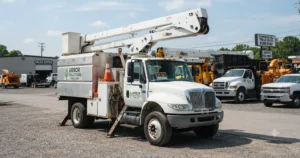
A new truck gives the buyer greater control over trim, color, engine, drivetrain, cab, bed length, axle ratio, towing package, payload package, interior equipment, and factory accessories. This can be particularly important for contractors and businesses that require a precise specification, such as utility service trucks or chassis trucks built for a specific upfit.
Towing capacity can change significantly based on cab, bed, wheelbase, engine, axle ratio, and factory towing equipment. Buyers should verify the rating of the exact truck rather than relying on a model’s highest advertised capacity.
Buying Used
Used inventory is limited to the trucks currently available. A buyer may need to compromise on color, trim, interior material, optional technology, or cosmetic details.
However, buyers should not compromise on specifications that affect safety or work capability. A truck with inadequate payload, towing capacity, bed length, or drivetrain is not a bargain, regardless of its price. Browse our current box trucks and cargo vans to see what’s available today.
Five-Year Cost Comparison
A five-year comparison should include the same annual mileage and usage assumptions for both trucks.
Over five years, a new truck typically means a higher purchase price, a larger loan, a lower financing rate, steeper early depreciation, higher insurance, lower repair costs, warranty protection, and a higher resale value at trade-in time. A used truck typically means a lower purchase price, a smaller loan, a higher financing rate, slower depreciation, lower insurance, higher maintenance, greater repair risk, and a lower resale value.
Used trucks commonly save money through a lower purchase price, a smaller sales-tax bill, slower depreciation, less money borrowed, potentially lower insurance, and the ability to afford a better trim for the same budget. New trucks recover part of their higher price through promotional financing, warranty-covered repairs, lower early maintenance, better fuel economy, reduced downtime, a longer remaining service life, and a stronger resale value.
The result depends on the exact trucks being compared.
Ten-Year Cost Comparison
A ten-year ownership period changes the financial picture.
Buying a new truck and selling it after only a few years can be expensive because the buyer absorbs early depreciation and then repeats the process with another vehicle. Keeping a new truck for ten years can spread that depreciation across a much longer service period, and the owner may also benefit from several payment-free years after the loan ends.
A used truck still begins with a lower purchase price, but it reaches advanced mileage and mechanical age sooner during the buyer’s ownership. Over ten years, the deciding factors become initial price, financing, annual mileage, maintenance history, major repairs, fuel consumption, downtime, resale value, and how long you actually keep the truck.
A carefully inspected used truck may still cost less over ten years. However, engine, transmission, diesel-emissions, or other major repairs can reduce the difference.
New vs. Used Trucks for Business Use
Commercial buyers should consider more than purchase price. For fleets and service businesses, RVs, campers, and specialty work vehicles may also factor into the same buying decision.
Cash Flow
A used truck can help a business preserve capital for payroll, equipment, inventory, marketing, insurance, and emergency reserves.
Downtime
A new truck may reduce early downtime and provide warranty support. For a contractor, delivery company, fleet, or service business, a breakdown can create lost revenue, delayed jobs, employee idle time, rental expenses, towing costs, and customer complaints. A new truck may therefore provide better value when predictable availability is more important than the lowest purchase price.
Configuration
A business may also need an exact payload rating, towing rating, wheelbase, cab-to-axle measurement, bed length, drivetrain, or upfit package. Buying an unsuitable used truck simply because it is cheaper can lead to lower productivity, unsafe operation, or expensive modifications. Fleets and contractors can compare our heavy construction equipment and farm equipment for job-ready configurations.
When Buying a New Truck Makes Sense
A new truck may be the better choice when you need maximum early reliability, when downtime would cost your business money, or when you qualify for promotional financing. It also makes sense when you need a precise factory specification, plan to keep the truck for many years, want full warranty coverage, need the latest safety systems, or simply don’t have money set aside for unexpected repairs.
When Buying a Used Truck Makes Sense
A used truck may be the better choice when your priority is a lower purchase price and a smaller loan, or when you plan to pay cash. It’s also a strong option when you can verify the truck’s history, have it pass an independent inspection, keep a repair reserve, don’t need the newest technology, or want a better trim within your budget.
How to Compare Two Trucks Properly
Use the same assumptions for both options.
Start by comparing equivalent trucks, matching the model, engine, drivetrain, cab, bed, towing equipment, payload package, and trim. Choose a single ownership period, either five or ten years, and apply it to both trucks. Estimate your annual mileage, since higher mileage increases the importance of fuel economy, maintenance, and reliability.
Next, calculate financing by including the APR, loan length, down payment, fees, and total amount repaid. Add operating expenses such as insurance, fuel, maintenance, repairs, tires, and registration. Estimate the resale value you’d expect at the end of the ownership period and subtract it from your total. Business buyers should also factor in downtime, estimating rental expenses and lost revenue from any possible breakdowns.
New vs. Used Truck Buying Checklist
Before purchasing, it helps to answer a short list of questions: What will you use the truck for, and what payload and towing capacity do you actually need? How many miles will you drive annually, and how long do you plan to keep the truck? What is the out-the-door price, the total loan cost, and the insurance estimate? What fuel economy can you expect, and what maintenance or repairs are likely coming up? How much warranty remains, and what will the truck realistically be worth later? If it’s used, has it been inspected? And finally, could you afford unexpected downtime, or are you paying for features you don’t really need?
Final Thoughts: Which One Saves More Money Long-Term?
For many buyers, a dependable used truck between approximately three and five years old will provide the strongest long-term financial value. The lower purchase price, smaller loan, slower depreciation, and potentially lower insurance cost can outweigh the additional maintenance risk.
However, used is not automatically cheaper. A neglected truck with hidden damage, poor service history, expensive financing, or major repair needs can cost more than a new truck over time.
A new truck may provide stronger value when warranty coverage matters, when downtime is expensive, when promotional financing is available, when a precise configuration is required, or when you plan to keep the truck for many years.
The best approach is to compare two specific trucks using the same mileage, financing period, ownership length, insurance estimates, maintenance costs, and expected resale value.
Don’t ask only “What is the monthly payment?” Ask instead: “How much will this truck cost from the day I buy it until the day I sell it?” That is the question that reveals whether a new or used truck truly saves more money. When you’re ready to run those numbers on a real vehicle, our current inventory is a good place to start comparing.
Frequently Asked Questions
Is a used truck cheaper in the long run?
A well-maintained used truck is often cheaper because it has a lower purchase price and has already absorbed part of its early depreciation. Major repairs or poor financing can reduce those savings.
What is the best age to buy a used truck?
A truck between approximately three and five years old may provide a good balance of lower depreciation, modern features, and remaining useful life. Condition and maintenance history are more important than age alone.
How quickly does a new truck depreciate?
New trucks generally lose value fastest during their first few years. The actual depreciation rate depends on the model, trim, mileage, demand, fuel prices, condition, and market conditions.
Are used-truck loans more expensive?
Used-truck loans commonly have higher interest rates, but the total loan and monthly payment may still be lower because the vehicle costs less.
Do new trucks cost less to maintain?
New trucks usually require fewer age-related repairs during the early ownership period. Routine servicing, tires, wear items, misuse, and damage may not be covered by warranty.
Is a certified pre-owned truck worth buying?
A certified pre-owned truck can be worthwhile when the inspection, warranty, and roadside benefits justify the higher price compared with a regular used truck.
Should a business buy a new or used truck?
Used trucks may preserve capital, while new trucks may provide more predictable reliability and warranty support. The answer depends on workload, downtime costs, financing, and required specifications.
Is it better to buy a used truck with cash?
Paying cash avoids loan interest, but buyers should not use all available savings. Keep enough money for registration, immediate maintenance, and unexpected repairs.
How many miles are too many for a used truck?
There is no universal mileage limit. A high-mileage truck with complete maintenance records may be a better purchase than a lower-mileage truck that was neglected or heavily abused.
Which trucks hold their value best?
Trucks with strong demand, reliable powertrains, practical configurations, clean histories, four-wheel drive, and desirable towing equipment may retain value better. Model-specific research is still necessary.
Is buying a new truck and keeping it for ten years a good idea?
It can be. Keeping a new truck for a long period spreads the early depreciation across more years and may provide several years without loan payments.
What should I inspect before buying a used truck?
Inspect the engine, transmission, frame, suspension, tires, brakes, fluids, electrical equipment, four-wheel-drive system, towing components, rust, accident history, and service records.
Find New and Used Trucks for Sale
Ready to compare real options?
Browse our complete inventory of new and used trucks for sale, including box trucks, full-size pickup trucks, flatbed trucks, chassis trucks, utility service trucks, cargo vans, farm equipment, and heavy construction equipment.
Compare available models, prices, mileage, configurations, and features to find the truck that matches your budget and intended use in our full inventory.
You can also contact our team for help comparing financing options, trade-in value, truck condition, and ownership costs, or learn more about AFT Sales. For more buying guidance, read our related posts on trucks for sale in the USA and buying new and used forestry trucks.