Job ads promise truck drivers $100,000 salaries right away. The real numbers rarely match that promise. So how much do truck drivers actually make?
Pay swings widely, from $40,000 to over $100,000 a year. Confusing pay structures make the picture harder to read. Per-mile rates, unpaid deadhead miles, and hidden fees blur real earnings. Many new drivers earn far less than recruiters suggest. This guide breaks down exactly what drivers can expect to earn in 2026.
Readers will find the true average truck driver salary today. This guide explains per-mile pay, hourly pay, and bonuses. It covers how experience, freight type, and state affect earnings. It also answers whether company driving or owning a truck pays more.
Truck drivers earn a median of $58,640 a year, or $28.19 an hour, according to the U.S. Bureau of Labor Statistics (BLS, May 2025). Pay ranges from $40,140 for entry-level drivers to $79,380 or more for experienced specialists, and top earners at carriers like Walmart, UPS, and Swift clear $100,000 or more a year.

How Much Do Truck Drivers Make on Average?
Truck drivers earn a median of $58,640 a year, or an average of $59,710, according to BLS data (May 2025). That equals $28.19 an hour at the median, or $28.71 at the average. Median pay is usually more reliable. A few very high earners can pull the average upward.
Truck Driver Pay by Time Period
| Time Period | Median Pay | Average Pay |
| Yearly | $58,640 | $59,710 |
| Monthly | $4,887 | $4,976 |
| Weekly | $1,128 | $1,148 |
| Hourly | $28.19 | $28.71 |
These numbers convert BLS annual wage data into simpler estimates. Real paychecks change with overtime, bonuses, and unpaid downtime. This data covers employed (W-2) drivers, not independent owner-operators, and reflects pay before taxes.
Why Does Truck Driver Pay Vary So Widely?
Most drivers are paid by the mile or by the load, not a flat salary. Earnings depend on how much freight a driver actually moves. The lowest 10% of drivers earn under $40,140 a year. The highest 10% earn more than $79,380, per BLS data. Specialized drivers, including hazmat, tanker, and heavy-haul operators, often clear $100,000 or more. Experience, freight type, route, and employer all affect where a driver lands in this range. The next sections explain exactly how drivers get paid and what drives pay up or down.
How Do Truck Drivers Get Paid?
Most truck drivers get paid per mile, not per hour. Carriers calculate a driver’s pay by multiplying miles driven by a fixed cents-per-mile (CPM) rate. Other drivers earn hourly wages, flat salaries, or a percentage of load revenue, depending on the job type.
Four pay structures dominate the industry:
- Pay per mile: used for OTR and regional freight, at $0.45 to $0.85 per mile.
- Pay per hour: used for local delivery, port drayage, and dock work, at $22.00 to $42.00 an hour.
- Pay per load or percentage: used by owner-operators and flatbed carriers, at 20% to 85% of revenue.
- Flat weekly salary: used by select private fleets like ShipEX, at $1,200 to $1,800 a week.
Carriers calculate mileage using routing software such as PC*MILER. Two mileage methods exist: practical mileage, which follows truck-legal highway routes, and shortest-route (HHG) mileage, which measures point-to-point distance. HHG mileage often pays 5% to 10% less than the actual distance driven, since it ignores real road routing.
How Much Do Truck Drivers Make Per Mile?
Company truck drivers earn between $0.45 and $0.85 per mile, depending on experience, freight type, and endorsements. Cents-per-mile (CPM) pay means drivers are compensated only for miles the carrier counts as paid, not every mile physically driven.
What Is CPM, and How Is It Calculated?
Weekly gross pay equals paid miles multiplied by the driver’s CPM rate. A driver running 2,500 miles a week at $0.55 CPM earns $1,375 that week, before bonuses or deductions.
Not every mile driven gets paid. Three categories of unpaid or reduced-pay miles affect real earnings:
- Deadhead miles: empty miles driven between drop-off and the next pickup. Better carriers pay full CPM; others pay reduced rates or cap the first 50 miles unpaid.
- Out-of-route miles: miles driven for fuel stops, parking searches, or weather detours, rarely compensated.
- HHG-calculated miles: shortest-path routing that underpays versus actual odometer distance by 5% to 10%.
A higher CPM rate does not always mean higher weekly pay. A driver earning $0.70 CPM on 1,800 miles a week earns $1,260. A driver earning $0.55 CPM on 3,000 miles a week earns $1,650. Total pay depends on paid mileage volume as much as the rate itself.
What Other Ways Do Truck Drivers Get Paid?
Truck drivers also get paid through hourly wages, flat salaries, load-based pay, and accessorial bonuses, depending on their route type and carrier. These alternative pay models apply mainly outside long-haul CPM freight.
Base pay alternatives to CPM:
- Hourly pay: standard for local pickup-and-delivery (P&D) roles like port drayage, city LTL routes, and dock transfers, paying $22.00 to $42.00 an hour.
- Salary pay: offered by select private fleets such as ShipEX, guaranteeing $1,200 to $1,800 a week regardless of weather or delay.
- Load-based (percentage) pay: common among owner-operators and flatbed carriers, paying 20% to 30% of revenue for company drivers and 70% to 85% for owner-operators.
Accessorial pay adds to base earnings for non-driving work:
- Detention pay compensates dock wait time, at $20.00 to $30.00 an hour after a two-hour free window.
- Layover pay compensates stranded drivers without cargo, at $100 to $200 per 24-hour period.
- Stop pay compensates multi-stop routes, at $25 to $50 per extra stop.
- Tarping pay compensates flatbed load securement, at $50 to $100 per load.
- Per diem reclassifies $0.10 to $0.17 CPM as a non-taxable meal allowance, increasing weekly take-home pay.
What Factors Affect How Much a Truck Driver Makes?
Experience, route type, freight type, location, and employer determine how much a truck driver makes. These five factors explain most of the gap between a $40,000 salary and a $100,000 salary in the same occupation.
- Increase pay with clean driving records and accumulated tenure, unlocking higher CPM tiers and dedicated accounts.
- Reduce pay with moving violations, preventable accidents, or FMCSA Clearinghouse violations, which trigger insurance surcharges.
- Raise earnings on OTR routes with 2,500 to 3,200 weekly miles, at the cost of two to four weeks away from home.
- Lower earnings on local routes with daily home time, trading mileage volume for regular schedules.
- Increase CPM rates with specialized freight like flatbed, tanker, and refrigerated (reefer) loads.
- Cap CPM rates on standard box trucks hauling dry van freight, the lowest-paying equipment category.
- Boost pay at private fleets such as Walmart and McLane, which recruit experienced drivers with premium rates.
- Suppress pay at large carriers offering lower base CPM offset by consistent freight and modern equipment.
- Cut real earnings through unpaid deadhead miles and dock downtime, regardless of the stated CPM rate.
Why Doesn’t a Higher Per-Mile Rate Always Mean Higher Pay?
Gross pay equals dispatched miles multiplied by CPM rate, not the rate alone. A driver earning $0.70 CPM but limited to 1,800 miles a week earns less than a driver earning $0.55 CPM running 3,000 miles a week. Operational efficiency and consistent dispatch matter as much as the advertised rate.
How Much Do New vs. Experienced Truck Drivers Make?
New truck drivers earn $50,000 to $60,000 in their first year, while drivers with five or more years of experience earn $90,000 to $120,000 or more. Pay rises in stages as drivers accumulate tenure, clean records, and endorsements.
Starting pay for new drivers: rookie CPM rates average $0.45 to $0.55 a mile. At 2,250 miles a week, a first-year driver earns roughly $1,125 weekly, or about $56,250 across 50 working weeks.
Pay Growth by Experience Level
| Career Stage | Experience | CPM Range | Annual Pay |
| Rookie | 0–12 months | $0.45–$0.55 | $50,000–$62,500 |
| Mid-Career | 1–3 years | $0.52–$0.62 | $62,500–$78,000 |
| Experienced | 3–5 years | $0.60–$0.70 | $75,000–$95,000 |
| Master Operator | 5+ years | $0.70–$0.85+ | $90,000–$120,000+ |
How Do Endorsements Boost Earning Potential?
Endorsements add specific CPM premiums tied to regulatory and skill requirements:
- Hazmat (H): adds $0.05 to $0.15 CPM, or $8,000 to $15,000 a year, requiring a TSA background check.
- Tanker (N): adds $0.05 to $0.10 CPM for liquid bulk freight like fuel and chemicals.
- Combination (X): merges hazmat and tanker access for fuel and chemical transport.
- Doubles/Triples (T): unlocks LTL double-trailer linehaul work, a top-paying segment.
How Much Do Truck Drivers Make by Job Type?
Truck driver pay by job type ranges from $44,000 for local drivers to $90,000 for OTR drivers, with team drivers earning $80,000 or more each ($160,000+ per truck). Job type determines the trade-off between total mileage, pay, and time at home.
| Job Type | Annual Pay | Weekly Miles | Home Time |
| OTR / Long-Haul | $65,000–$90,000 | 2,400–3,100 | 2–4 weeks out |
| Regional | $58,000–$75,000 | 2,000–2,500 | Weekly reset |
| Local P&D | $44,000–$60,000 | 800–1,400 | Daily |
| Dedicated Routes | $68,000–$85,000 | 2,200–2,700 | Predictable/weekly |
| Team Driving | $60,000–$80,000+ each | 4,500–6,000 total | 3–5 weeks out |
OTR and long-haul drivers transport freight over interstate corridors exceeding 250 miles, trading extended time away from home for higher mileage volume.
Regional drivers operate within roughly 500 miles of a home terminal, balancing earnings with weekly 34-hour reset periods at home.
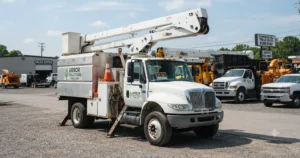
Local drivers operate within about 150 miles, often behind the wheel of utility trucks on P&D and dock routes, returning home daily and earning hourly wages of $22.00 to $30.00 with no over-the-road living costs.
Dedicated route drivers serve single accounts like Target and Home Depot, gaining predictable schedules and steady weekly mileage.
Team drivers share one tractor, running 4,500 to 6,000 combined weekly miles, which raises total tractor earnings to $120,000 to $160,000 or more.
Pay and home time trade off directly across every job type. Higher mileage volume and higher pay come with longer stretches away from home, while local and dedicated routes trade some earning potential for predictable schedules.
Which Trucking Jobs Pay the Most?
Heavy haul driving pays the most among trucking jobs, reaching $85,000 to $115,000 a year, closely followed by hazmat and tanker roles at $75,000 to $110,000. Specialized freight commands higher pay due to technical skill, physical demand, and liability requirements.
| Freight Niche | Annual Pay | Requirement |
| Hazmat / Fuel Tanker | $75,000–$110,000+ | X-endorsement, TSA clearance |
| Heavy Haul / Oversized | $85,000–$115,000+ | Multi-axle rigging, permits |
| Flatbed | $65,000–$80,000+ | Load securement, tarping |
| Reefer / Specialized | $62,000–$80,000 | Temperature monitoring |
Hazmat and tanker driving requires TSA background checks and strict safety compliance for cargo like fuel, compressed gases, and chemicals like ammonia and chlorine.
Heavy haul and oversized load driving requires route permits and escort coordination for heavy equipment like construction machinery, bridge beams, and wind turbine blades.
Flatbed driving requires manual labor to chain, strap, and tarp open-deck cargo hauled on flatbed trucks in all weather, adding tarping accessory pay of $50 to $100 per load.
Reefer and specialized freight carries strict delivery windows for perishable cargo like produce, dairy, and pharmaceuticals, requiring continuous temperature tracking.
These roles pay more because they demand technical endorsements, physical stamina, and higher personal liability than standard dry van freight.
Do Company Drivers or Owner-Operators Make More Money?
Owner-operators earn more on average after expenses ($80,000 to $150,000 net) than typical company drivers ($50,000 to $90,000), but top company drivers at carriers like UPS and Walmart can match or exceed owner-operator income with none of the financial risk. Owner-operators average $225,000 to $260,000 in gross revenue, yet operating costs consume 55% to 70% of that total, leaving net income closer to $80,000 to $150,000.
Company drivers trade higher gross potential for lower risk. Carriers cover fuel, insurance, and truck payments, and pay company drivers a fixed wage or CPM rate regardless of fuel prices or freight rate swings. Owner-operators absorb that risk directly, in exchange for a larger share of each load’s revenue.
How Much Do Company Truck Drivers Make?
Company truck drivers earn $50,000 to $120,000 or more a year, depending on the carrier, route, and experience level. Carriers pay company drivers through wages, mileage pay, bonuses, and benefits, while covering all vehicle-related costs.
Who Covers Truck Costs?
The motor carrier pays for fuel, truck payments, liability insurance, permits, tolls, and repairs. Company drivers also receive benefits like health insurance, 401(k) matching, and paid time off.
What Do Major Carriers Actually Pay?
- Walmart: first-year drivers earn up to $110,000; experienced drivers earn $100,000 to $120,000 or more, under an activity-based pay system covering mileage, layovers, and inspections.
- UPS: feeder (tractor-trailer) drivers reach a top wage of about $49.00 an hour under the Teamsters contract, averaging $162,000 a year in total compensation; long-haul team drivers average $172,000.
- Swift Transportation: starting OTR drivers get a $1,000 weekly pay floor under the Guaranteed Pay+ Program; experienced drivers average $67,000 to $93,000 a year.
- Amazon Freight Partner: drivers earn $22.00 to $28.00 an hour, or $50,000 to $72,000 a year, on regional middle-mile routes.
- FedEx Freight: linehaul drivers earn $70,000 to $100,000 or more a year on regional LTL routes.
These figures represent specific carrier pay structures, not industry-wide averages, and vary by region, route, and driver tenure.
How Much Do Owner-Operators Really Make?
Owner-operators gross $225,000 to $260,000 a year on average, but keep only $80,000 to $150,000 after expenses. Gross revenue and personal income differ sharply once fuel, insurance, and equipment costs are subtracted.
Owner-Operator Expense Breakdown
| Expense Category | Annual Range | % of Revenue |
| Diesel fuel | $55,000–$75,000 | 25%–30% |
| Truck payment/lease | $24,000–$42,000 | 10%–16% |
| Maintenance & tires | $15,000–$30,000 | 7%–12% |
| Insurance | $10,000–$18,000 | 4%–7% |
| Permits, IFTA, taxes | $5,000–$10,000 | 2%–4% |
| Total overhead | $109,000–$175,000 | 55%–70% |
| Net income (pre-tax) | $80,000–$150,000 | 30%–45% |
Owner-operators carry equipment risk that company drivers do not. An engine overhaul can cost $20,000 to $30,000, and a drop in spot market freight rates can eliminate personal income for weeks at a time. In exchange, owner-operators keep a larger share of each load’s revenue and control which freight they accept.
How Much Do Truck Drivers Make by State?
Truck driver pay by state ranges from $44,475 in Hawaii to $78,797 in North Dakota, according to state-level BLS wage data. Freight density, union presence, and cost of living all shift state-level pay.
Highest-Paying States
| State | Mean Annual Wage | Market Factor |
| North Dakota | $78,797 | Oilfield and agricultural freight |
| Illinois | $73,205 | National rail and intermodal hub |
| Wyoming | $70,617 | Energy transport corridors |
Lowest-Paying States
| State | Mean Annual Wage | Market Factor |
| Idaho | $47,833 | Lower industrial freight volume |
| Hawaii | $44,475 | High living costs, island short-haul only |
Pay does not equal purchasing power. A driver earning $61,194 in high-cost Washington state faces steeper housing costs than a driver earning a similar wage in Mississippi or Indiana. Nominal pay must be weighed against local living costs to compare real earnings across states.
California and Texas represent two different pay models. California drivers earn $62,000 to $72,000 a year on average, driven by Los Angeles and Long Beach port traffic, though state income tax reduces net pay. Texas drivers earn $56,470 on average, a lower nominal figure offset by zero state income tax.
How Much Do Truck Drivers Actually Take Home After Taxes?
Truck drivers take home roughly 75% to 85% of gross pay after taxes and deductions. Federal income tax, FICA payroll tax, and state income tax (where applicable) reduce gross wages before a driver sees a paycheck.
Standard payroll deductions for company drivers:
- Federal income tax: progressive rate applied after standard deductions.
- FICA tax: 7.65% total, covering Social Security (6.2%) and Medicare (1.45%).
- State income tax: 0% in states like Texas, Florida, and Washington; over 8% in high-tax states.
- Per diem allocation: $0.10 to $0.17 CPM reclassified as non-taxable meal reimbursement, reducing taxable wages.
Take-home pay example: an OTR driver earning $65,000 a year on 100,000 paid miles, with a $0.12 CPM per diem program, breaks down as follows.
| Line Item | Amount |
| Gross annual pay | $65,000.00 |
| Non-taxable per diem (100,000 mi × $0.12) | $12,000.00 |
| Adjusted taxable wage base | $53,000.00 |
| Federal income tax (est.) | $6,360.00 |
| FICA tax (7.65%) | $4,054.50 |
| State income tax (4% avg.) | $2,120.00 |
| Net annual take-home pay | ~$52,465.50 |
| Net weekly take-home pay | ~$1,008.95 |
Sheltering $12,000 through per diem saves this driver roughly $1,800 to $2,400 a year in taxes compared to a standard wage structure. This example is illustrative only, not tax advice, and actual withholding varies by filing status, state, and carrier.
Is Truck Driving Worth It Financially?
Truck driving offers a fast payback on training costs and stable income, offset by high turnover and time away from home. CDL training costs $3,000 to $7,000, and first-year earnings of $50,000 to $60,000 typically recover that investment within 6 to 12 weeks of solo driving.
Job stability supports the financial case. Freight transport requires physical drivers, and major carriers like Walmart, UPS, and Swift offer health insurance, 401(k) matching, and tuition reimbursement.
Lifestyle trade-offs weigh against the pay. Large OTR fleets report driver turnover of 90% to 95% annually, and roughly 35% of new drivers quit within their first 90 days. Extended time away from home, irregular sleep, and unpaid dock waiting time drive most exits.
Can Truck Drivers Become Millionaires?
Some drivers build wealth through three paths: living in the sleeper cab to eliminate rent, moving into $100,000-plus specialized freight like hazmat or LTL linehaul, or expanding from one truck into a fleet of 3 to 10 trucks as a business owner.
Will Truck Driver Pay Go Up in 2026?
Truck driver pay is likely to rise moderately in 2026, driven by a tightening labor pool and recovering freight demand. Wage growth slowed to 2.4% in 2024 and 0.9% in 2025 during a freight downturn before starting to recover as volumes improved.
Is There Still a Driver Shortage?
The American Trucking Associations estimates a shortage of 60,000 to 82,000 drivers, projected to reach 160,000 by 2031. Over 400,000 CDLs are issued annually, suggesting the industry faces a retention problem more than an absolute labor shortage. Carriers offering predictable home time report turnover as low as 14% to 20%.
A federal rule is tightening driver supply in 2026. On March 16, 2026, an FMCSA final rule restricted non-domiciled CDL eligibility to three visa categories: H-2A, H-2B, and E-2. The rule excludes DACA recipients, asylum seekers, refugees, and Temporary Protected Status holders from new or renewed non-domiciled CDLs. FMCSA estimates roughly 194,000 current non-domiciled CDL holders could be affected as licenses reach renewal, tightening driver supply in freight-dense corridors over time.
Freight demand and fuel costs limit rapid pay increases. Rising freight volumes support higher per-mile rates, but elevated diesel prices squeeze owner-operator margins and carrier operating costs, slowing the pace of wage growth.
Automation is reshaping some jobs, not eliminating them. Companies like Aurora, Kodiak Robotics, and Waabi operate autonomous trucks on fixed highway corridors, including the I-45 route between Dallas and Houston. This hub-and-spoke model shifts long highway segments to autonomous trucks, while human drivers continue handling first-mile and last-mile work: urban navigation, dock positioning, and customer delivery. This shift is expected to grow local and regional driving roles that offer hourly pay and daily home time.
Conclusion
Truck driver pay depends on experience, freight type, route, and employer, not a single national number. Entry-level company drivers earn $50,000 to $60,000, while specialized and senior drivers exceed $100,000 through endorsements, dedicated freight, or top-tier carriers like Walmart and UPS. Owner-operators can gross over $225,000 but keep a smaller net share after fuel, insurance, and equipment costs. Drivers evaluating a trucking career should weigh full compensation, including per diem, bonuses, and accessorial pay, against route type and home-time trade-offs, rather than judging pay by CPM rate alone.
Frequently Asked Questions About Truck Driver Pay
What type of truck driver makes the most money?
Owner-operators and specialized freight haulers make the most money among truck drivers. Hazmat, tanker, and heavy-haul specialists often exceed $100,000 to $150,000 a year. These roles command premium pay due to certification requirements like TSA background checks and higher personal risk. Standard company drivers hauling dry van freight earn less than these specialized positions.
Do truck drivers make good money?
Truck drivers make good money, with a median pay of $58,640 a year, according to BLS data (May 2025). Top earners with experience or specialized freight, such as hazmat, tanker, and flatbed drivers, surpass $100,000 a year. Entry-level pay starts near $50,000 and rises steadily with experience.
Is getting a CDL worth it in 2026?
A CDL provides access to above-average pay without a four-year college degree. Accredited training programs cost $3,000 to $7,000. Carriers like Walmart, Swift, and Schneider commonly reimburse CDL tuition in exchange for a work commitment.
What is a female trucker called?
A female trucker is called a truck driver or trucker, the same title used for any driver. No separate professional title exists based on gender. Pay, licensing, and job requirements remain identical regardless of gender.
Is truck driving considered blue collar?
Truck driving is a blue-collar occupation, involving hands-on physical work like loading, securing, and inspecting cargo It requires a commercial driver’s license instead of a four-year degree. Many drivers earn wages comparable to entry-level white-collar jobs, such as retail management or administrative roles.