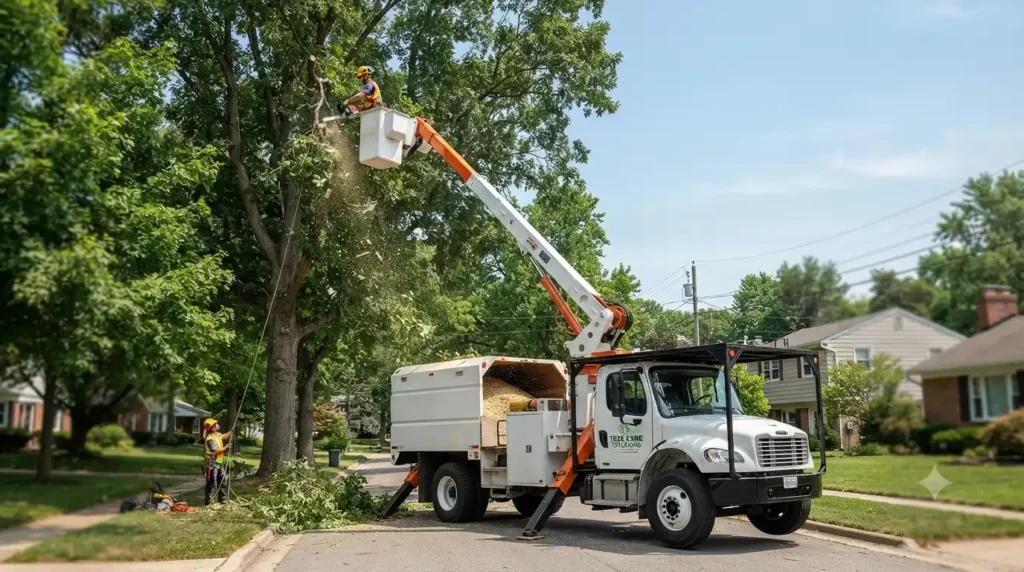
A forestry bucket truck helps tree-care professionals reach high branches, work around obstacles and complete difficult jobs more safely. However, choosing the right truck takes more than checking the boom height.
Buyers also need to consider side reach, truck size, weight, boom design, safety features and maintenance history. This guide explains the main options in simple language so professionals can choose a truck that fits their daily work.
What Is a Forestry Bucket Truck?
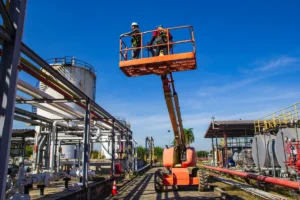
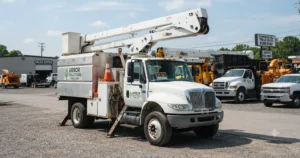
A forestry bucket truck is a commercial vehicle fitted with a hydraulic boom and an elevated work platform. The platform, often called a bucket, allows a worker to reach trees, branches and vegetation without climbing.
These trucks are built for tree trimming, storm cleanup, roadside maintenance and utility vegetation work. Many models also include a chipper body, tool storage, a cab guard and space for ropes, saws and other equipment.
A forestry truck is different from a normal bucket truck used for lights or signs. Its design focuses more on tree access, side reach, protection from falling branches and the needs of arborists
How Forestry Bucket Trucks Work
Most forestry trucks use a hydraulic system powered by the vehicle’s engine. A power take-off system, usually called a PTO, sends power from the engine to the hydraulic pump.
The pump moves hydraulic oil through hoses, valves and cylinders. This pressure raises, lowers and rotates the boom. It may also control the bucket, outriggers and chipper dump body.
The operator normally controls the boom from inside the bucket. Lower controls are also placed near the base of the boom so a ground worker can lower the bucket during an emergency.
Types of Forestry Bucket Trucks
Forestry trucks come in different designs. Some combine an aerial boom with a chipper body, while others are built only to carry the boom and work platform.
The right choice depends on crew size and the type of jobs being handled. A small tree company may prefer one truck that can lift workers and carry wood chips. A larger company may use a rear-mount truck with a separate chip truck.
Boom movement also matters. Some units can move past the centre of the truck, while others have a more limited working area. Buyers should compare the full movement of the boom instead of focusing only on maximum height.
Forestry Bucket Truck With Chipper Body
This type of forestry bucket truck has a chip storage box behind the boom. Wood chips from a chipper can be blown directly into the body and carried away from the job.
It is a practical option for smaller crews because one truck can provide aerial access, tool storage and debris transport. It can reduce the number of vehicles needed at the site.
The main concern is weight. The boom, tools, workers and wood chips all add load. Buyers should check the truck’s legal carrying capacity before choosing a large chipper body.
Rear-Mount Forestry Bucket Truck
A rear-mount forestry truck has the aerial boom installed near the back of the vehicle. It normally offers good access around the rear and sides of the truck.
This setup is useful for companies that already own separate chip trucks. The bucket truck can stay on the job while another vehicle removes wood chips and debris.
Rear-mount trucks may provide better working space, but they often require more vehicles and crew planning. They are usually more suitable for established tree-care operations.
Overcenter and Non-Overcenter Trucks
An overcenter boom can travel past the middle line of the truck. This gives the operator a wider working area and reduces the need to move the vehicle during a job.
A non-overcenter boom cannot move beyond the truck’s centre point. It may still provide good height, but it offers less freedom when working around wide trees or obstacles.
Overcenter trucks are common in forestry because tree branches grow in many directions. The wider movement makes it easier to reach around the canopy.
Insulated vs Non-Insulated Bucket Trucks
An insulated bucket truck contains special sections designed to reduce the movement of electricity through the boom. These trucks are commonly used for vegetation work near power lines.
However, insulation does not remove electrical danger. The boom must be regularly tested, cleaned and maintained. Workers must also follow safe approach distances and proper electrical procedures.
A non-insulated truck is suitable for jobs where electrical contact is not a risk. It may cost less, but it should not be used as electrical protection near live power lines.
Bucket Truck Heights (55 ft–75 ft)
Forestry bucket trucks are commonly available with working heights between 55 and 75 feet. The correct height depends on the trees, streets and properties where the truck will be used.
A 55-to-60-foot truck is often enough for residential areas, parks and city streets. These trucks are normally easier to drive, park and set up in limited spaces.
A 70-to-75-foot truck is better for tall trees and utility vegetation work. However, taller trucks cost more, weigh more and may require extra space and a commercial driving licence.
Platform Height and Working Height
Platform height means the maximum height of the bucket floor. Working height normally includes the extra reach of the person standing inside the bucket.
These two measurements are not the same. A seller may advertise a truck using either number, so buyers should always ask which measurement is being shown.
Comparing platform height from one truck with working height from another can lead to a poor buying decision. Always compare the same type of measurement.
Why Side Reach Matters
Side reach is the horizontal distance the bucket can move away from the truck. It is often just as important as vertical height.
A tree may only be 55 feet tall, but the truck may need to park far away because of a wall, ditch, parked vehicle or soft ground. A truck with weak side reach may not reach the branch.
Buyers should request the boom’s working-envelope chart. This shows the full area the bucket can reach around the vehicle.
Hydraulic Boom Systems
The hydraulic system controls the boom, bucket, outriggers and other powered parts. It must respond smoothly and safely to the operator’s controls.
Modern trucks may use proportional controls. This allows the operator to move the boom slowly with a light touch or faster with a stronger control movement.
Some forestry trucks also provide hydraulic connections inside the bucket for saws and pruners. Before buying, check that the tool pressure, oil flow and connectors match the equipment used by the crew.
Common Hydraulic Problems
Hydraulic problems may include leaking hoses, slow movement, shaking, strange pump noises and cylinders that drift after the controls are released.
Milky hydraulic oil may show that water has entered the system. Dark or dirty oil may mean that maintenance has been ignored.
A truck can look clean and freshly painted while still having expensive hydraulic problems. The boom should always be tested through its full movement before purchase.
Forestry Bucket Truck Applications
Forestry bucket trucks are mainly used for tree trimming, dead branch removal, crown reduction and storm cleanup. They help workers reach areas that may be difficult or unsafe to access by climbing.
Utility companies use these trucks to manage vegetation near power lines. Municipal teams also use them for roadside trees, parks, schools and public properties.
They can also support tree inspections, pest treatment and the installation of tree cables. The truck provides access, but the work still requires trained and experienced tree-care professionals.
Forestry Bucket Truck Safety
The truck should be placed on firm and level ground before the boom is raised. The operator must inspect slopes, traffic, power lines, weather and falling-branch risks.
Outriggers should be fully set on stable ground or suitable pads. The parking brake must be applied, and wheel chocks may be needed when the truck is on a slope.
Workers should wear the correct fall-protection equipment and connect it to the approved anchor point inside the bucket. They should never stand on boxes or ladders to gain extra height.
Forestry Bucket Truck Maintenance
A forestry bucket truck contains two major systems: the commercial vehicle and the aerial boom. Both need regular maintenance.
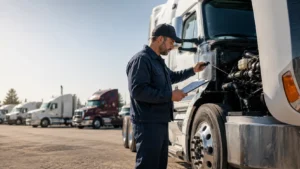
Daily checks should include the bucket, controls, hydraulic hoses, outriggers, tyres, brakes, fluid levels and emergency lowering system. Any leak, crack or unusual movement should be checked before work begins.
Scheduled maintenance may include hydraulic oil changes, filter replacement, boom lubrication, cylinder inspection and safety testing. Insulated trucks may also require regular electrical testing.
Mileage Is Not the Whole Story
Low mileage does not always mean low use. A forestry truck may spend many hours parked with the engine running while the boom is operating.
Buyers should ask for engine hours, PTO hours and aerial inspection records. These details can show how much the equipment has actually worked.
A low-mileage truck with heavy boom use may require more repair than a higher-mileage truck that was mainly driven on the road.
Forestry Bucket Trucks for Sale
Forestry trucks for sale can be found through dealers, auctions, rental fleets and utility companies. Prices vary depending on age, height, body type, condition and service history.
A buyer should inspect both the truck chassis and the aerial system. The engine, transmission, brakes and tyres may be in good condition while the boom has hidden wear.
Ask for the aerial model, serial number, inspection records and repair history. The truck should also be weighed so the buyer knows how much legal payload remains.
What to Check Before Buying
Check the working height, side reach, platform capacity and boom movement. Confirm whether the truck is insulated and whether electrical test records are available.
Inspect the chipper body, outriggers, hydraulic hoses, bucket and safety controls. Look for corrosion, cracks, leaks and unapproved repairs.
A professional inspection may cost money, but it can prevent a much larger repair bill later.
New vs Used Forestry Bucket Trucks
A new truck offers a warranty, current safety features and the ability to choose the exact boom, chassis and body design. It is a good option for companies that will use the truck daily.
A used truck costs less and may be available immediately. It can be a practical choice for a growing company or a business adding its first aerial unit.
The biggest risk with used forestry bucket trucks for sale is missing service history. A lower purchase price is not always a saving if the truck soon needs major hydraulic, engine or boom repairs.
Forestry Bucket Truck Rental
A forestry bucket truck rental is useful when the equipment is only needed for a short project, storm response or seasonal work.
Renting also allows a company to test a certain boom height or truck size before buying. This can help the crew learn whether a 60-foot or 75-foot model fits their normal jobs.
Before renting, check delivery charges, hour limits, insurance, fuel rules and repair support. The contract should also explain what happens if the truck breaks down during the rental period.
Best Forestry Bucket Truck Brands
Well-known forestry bucket truck brands include Altec, Terex Hi-Ranger, Versalift and Dur-A-Lift. Each brand offers different heights, boom designs and body options.
Altec and Terex are common among utility and professional tree-care companies. Versalift offers several rear-mount and high-reach models, while Dur-A-Lift is known for more compact urban forestry trucks.
The best brand is not always the one with the tallest boom. Local parts, trained technicians and service support can be more valuable than a small difference in height.
Frequently Asked Questions
Q: What is a forestry bucket truck?
It is a commercial truck with a hydraulic boom and work platform used for tree trimming, vegetation control and work at height.
Q: How high can forestry bucket trucks reach?
Most professional forestry trucks provide working heights from around 55 to 75 feet, while specialised models may reach higher.
Q: Is a 75 ft forestry bucket truck better?
Not always. It offers more height, but it is also heavier, more expensive and harder to position in small spaces.
Q: What is side reach?
Side reach is the horizontal distance the bucket can move away from the truck.
Q: Are forestry bucket trucks insulated?
Some are insulated for work near electrical lines, while others are non-insulated and meant for general tree-care work.
Q: Do I need a commercial licence?
It depends on the completed truck’s weight and local driving rules.
Q: Can a bucket truck lift heavy tree limbs?
Only if the aerial device is designed and rated for material handling.
Q: Should I buy a new or used truck?
Buy new for heavy daily use and warranty support. Buy used when the truck has good records and passes a full inspection.
Q: Is renting a forestry bucket truck useful?
Yes. Rental is a good option for short projects, storm work or testing a truck before buying.