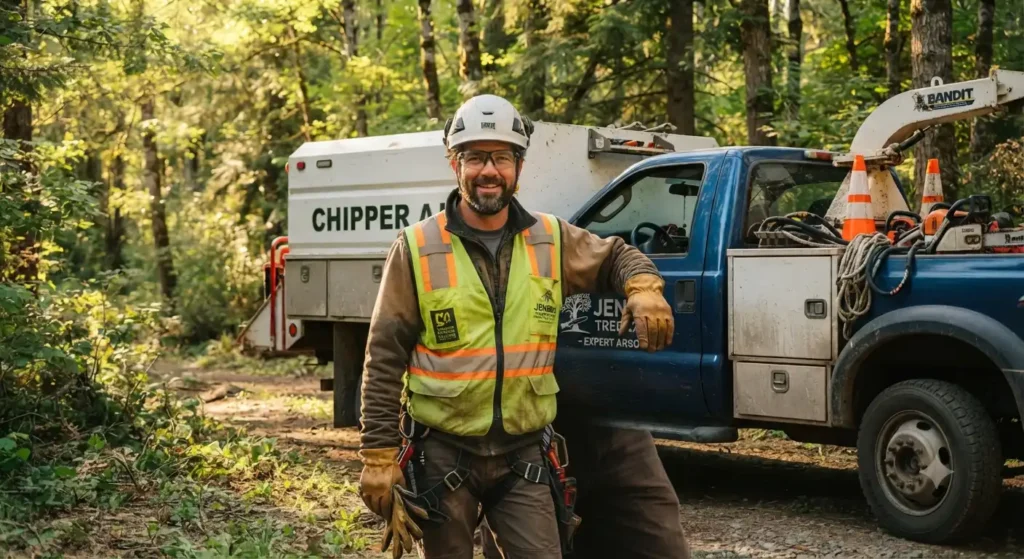
A tree crew shows up to a job with the wrong truck, and the whole day falls apart. The chipper can’t feed fast enough because the body’s too small. The bucket can’t reach the top third of the canopy. The logs sit on the landing because nothing on site can haul them out. None of this is a mechanical failure. It’s a truck selection failure, and it happens more often than most fleet managers want to admit.
Types of forestry trucks fall into a handful of core categories, each built around a specific job: moving chips, lifting workers into the canopy, hauling timber, or clearing debris off a site. Get the category wrong and you’re paying for downtime, rework, or a vehicle that’s fighting the terrain instead of working with it.
This guide breaks down the main types of forestry trucks on the market today, the bodies and upfits that go on them, the mechanical systems that make them tick, and the questions crews ask most often before they buy or lease. By the end, you’ll know exactly which category fits your operation and what to check before you sign anything.
Introduction to Forestry Trucks & Their Industry Role
A forestry truck is a commercial vehicle built or upfitted for the specific demands of tree work, timber transport, and vegetation management. That’s a broad category on paper, but in practice it splits cleanly by function: hauling chips, lifting people, moving logs, or clearing debris.
These trucks serve a specific set of buyers:
- Tree service companies and arborists, who need bucket trucks and chip trucks for daily pruning, removal, and cleanup work
- Municipal forestry and public works departments, managing street trees, park maintenance, and storm response
- Utility vegetation management crews, keeping tree growth clear of power lines
- Logging and timber contractors, moving raw material from the stand to the mill
The operating environment is where forestry trucks earn their keep. Unlike a standard delivery fleet running paved routes, these vehicles work rutted logging roads, soft ground on active job sites, steep rural grades, and tight residential streets in the same week. That combination drives most of the design choices covered below: reinforced frames, higher ground clearance, PTO-driven equipment, and suspension tuned for load stability rather than ride comfort.
Understanding the categories below matters whether you’re buying your first truck or your fifteenth, because the wrong body-to-chassis match is one of the most expensive mistakes a fleet manager can make.
Core Types of Forestry Trucks Explained
Chipper Trucks
A chipper truck pairs a chip body, a large open-top bed designed for high-volume, low-density material, with a chassis strong enough to carry it once loaded. The body typically features a slanted or vertical front wall to keep chips from spilling forward under braking, along with a rear door for dumping.
Most chipper trucks run a PTO (power take-off) system off the truck’s transmission or engine, which powers the wood chipper directly without a separate motor. This keeps the setup lighter and simpler than a standalone chipper unit, though some operations still prefer towable chippers paired with a standard flatbed for flexibility.
Common use case: A two- or three-person tree crew doing removals and pruning, feeding brush into a chipper mounted at the front of the body, with chips discharging directly into the bed.
Bucket Trucks
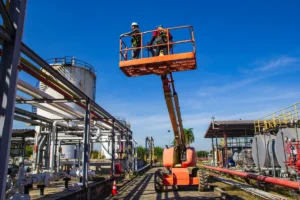
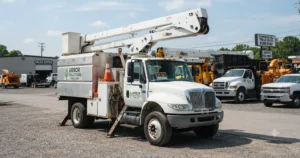
Bucket trucks, also called aerial lift trucks, mount a hydraulic boom and platform (the “bucket”) on a truck chassis, letting a worker reach an elevated tree canopy or utility lines without climbing. Boom height, reach, and rotation vary significantly by model, so matching the lift spec to typical tree height and street clearance matters more than most first-time buyers expect.
Two names come up constantly in this space: Versalift and Dur-A-Lift, both long-established manufacturers of aerial devices built specifically for tree care and utility work. Specs worth comparing between models include:
- Maximum working height
- Horizontal reach
- Platform capacity (single vs. dual operator)
- Insulation rating (critical for utility line clearance work)
- Lower boom vs. upper boom articulation
Common use case: Utility vegetation crews trimming branches away from power lines, or municipal tree crews doing routine canopy maintenance along city streets. You can browse current utility and forestry bucket trucks for sale to compare working height and reach across available inventory.
Logging & Timber Trucks
Logging trucks are built to move raw, heavy, awkwardly shaped loads such as full-length logs or cut timber from harvest sites to mills or landings. These trucks typically run multi-axle configurations (tandem or tridem rear axles) to distribute weight legally and safely, along with reinforced frames and heavy-duty suspension systems designed for sustained overweight loads on unpaved terrain.
Bodies range from simple log bunks (steel cradles that hold logs in place with stakes or chains) to fully articulated trailers for longer hauls. Because logging trucks routinely operate at or near maximum legal gross vehicle weight, suspension choice isn’t cosmetic. It directly affects axle load distribution, tire wear, and how the truck handles washboard logging roads.
Common use case: Independent logging contractors or timber company fleets hauling harvested logs from a cutting site to a processing mill, often over unpaved forest roads for a significant portion of the trip.
Forestry Dump Trucks & Articulated Dump Trucks
These trucks handle the less glamorous but equally essential job of moving debris, brush, gravel, and general material around a job site or off-highway. A standard forestry dump truck looks similar to a construction dump truck but is often spec’d with a shorter wheelbase and higher ground clearance for maneuvering around stumps and uneven ground.
Articulated dump trucks (ADTs) take this further with a pivoting joint between the cab and the bed, giving them significantly better off-road capability on soft, muddy, or steeply graded terrain, conditions where a rigid-frame dump truck would struggle for traction.
Common use case: Site clearing operations hauling stumps, brush, and soil off an active logging or land-clearing site where terrain is too rough for standard highway trucks. Current flatbed and dump-ready trucks are worth checking for chassis options that fit this kind of upfit.
Quick Comparison: Which Truck Type Fits Which Job?
| Truck Type | Primary Job | Typical Buyer | Key Spec to Check |
|---|---|---|---|
| Chipper Truck | Hauling wood chips from tree work | Tree service crews | Chip body volume, PTO compatibility |
| Bucket Truck | Elevated access for pruning/line clearance | Arborists, utility crews | Working height, reach, insulation rating |
| Logging/Timber Truck | Hauling raw logs from harvest to mill | Logging contractors | Axle configuration, GVWR |
| Forestry Dump/ADT | Moving debris, brush, and fill material | Land-clearing operations | Ground clearance, off-road traction |
Understanding Truck Bodies and Upfits
The chassis is only half the equation. The body determines what the truck can actually do on site.
- Chip bodies: High-sided, open-top beds built for low-density wood chips, often with a removable roof and rear tailgate for full-height loading and easy dumping.
- Dump bodies: Hydraulically actuated beds that tilt to unload debris, soil, or gravel without manual shoveling.
- Forestry bodies: A catch-all term for beds built specifically for tree care work, often combining tool storage, chip capacity, and equipment mounts in one unit.
- Utility bodies: Enclosed compartment-style beds for storing tools, chainsaws, ropes, and rigging equipment securely.
- Platform bodies: Flatbed-style beds used with towable equipment or for hauling logs, brush, or equipment on pallets.
Cab chassis compatibility is where a lot of buyers get tripped up. Not every body fits every chassis; weight ratings, wheelbase, and frame width all need to line up. The major manufacturers supplying forestry-ready chassis include:
- Ford (F-550/F-750 series, common for chip and dump bodies)
- Freightliner (M2 series, popular for medium-duty forestry upfits)
- International (MV and HV series for heavier logging and dump applications)
- Kenworth (T-series trucks for heavy log hauling)
- Peterbilt (widely used in the logging industry for its durability under sustained heavy loads)
Before ordering an upfit, confirm the chassis GVWR (gross vehicle weight rating) can actually support the fully loaded body. A mistake here isn’t just inconvenient. It can push the truck into a different licensing and inspection category entirely. If you’re shopping for a bare chassis to upfit yourself, browse available chassis for sale to see current weight ratings and configurations.
Mechanical Systems and Equipment Components
PTO Systems and Hydraulic Hoists
The PTO (power take-off) is the mechanical link between the truck’s engine or transmission and its auxiliary equipment. Chippers, hydraulic pumps, and lift systems all draw power through it. A properly matched PTO setup means the chipper or boom runs at consistent power regardless of engine idle speed, which matters on long work days.
Hydraulic hoists handle the heavy lifting on dump bodies, tilting the bed to unload material. Hoist capacity should be matched to the maximum expected load. Undersized hoists wear out fast and can fail under strain, which is a safety issue as much as a cost issue.
Tool Compartments, Tailgates, and Removable Roofs
The smaller details separate a truck that works well from one that just works:
- Lockable tool compartments keep chainsaws, chains, and rigging gear secure and organized between jobs
- Tailgates on chip bodies need to open fully and seal well, since a poor seal means chips leaking out during transport
- Removable roofs on chip bodies let crews load taller brush and branches without cutting everything down to bed height first, saving real time on removal jobs
Quick example: A tree service crew running an older chip body kept losing chips out the back on the highway because the tailgate seal had worn out. After switching to a truck with a tighter tailgate seal and a removable roof, cleanup time on removal jobs dropped, and they stopped losing material in transit. Small components like this often make a bigger difference than the size of the truck itself.
Frequently Asked Questions (FAQ)
What truck body is best for tree service work? For most general tree service operations, a chip body on a medium-duty chassis (like an F-550 or similar) covers the majority of daily jobs: pruning, small removals, and brush cleanup. Companies doing larger removals or utility work typically run a mixed fleet, with a chip truck for material hauling and a separate bucket truck for elevated access.
Can a standard dump truck be converted into a chip truck? In some cases, yes, but it depends on the chassis and existing body. A standard dump body doesn’t have the sidewall height or tailgate design needed to hold low-density chips efficiently, so a full conversion usually means replacing the body entirely rather than modifying it. It’s often more cost effective to buy a purpose-built chip body than to retrofit a dump truck.
How much does a forestry truck typically cost? Pricing varies widely based on chassis size, body type, and whether it’s new or used. A used chip truck can run significantly less than a new bucket truck with a high reach boom, so it’s worth defining your job requirements first, then shopping within that spec rather than starting with a budget number alone.
Do I need a special license to drive a forestry truck? It depends on the gross vehicle weight rating (GVWR). Trucks under 26,001 lbs GVWR typically don’t require a CDL in most states, but heavier logging trucks and larger dump trucks often do. Always check your state’s specific DOT and CDL thresholds before assigning drivers.
What’s the difference between a bucket truck and a boom truck? The terms are often used interchangeably, but “bucket truck” typically refers to a truck with a platform (bucket) at the end of the boom for a worker to stand in, while “boom truck” can refer more broadly to any truck with a hydraulic crane or lift arm, sometimes without a platform.
How often do PTO systems need maintenance? PTO systems should be inspected as part of regular preventive maintenance schedules, typically alongside engine service intervals. Watch for unusual noise, slipping engagement, or fluid leaks around the PTO unit, and address them before they cause downtime on a job.
What’s the typical lifespan of a chip body? With regular maintenance and proper loading practices (avoiding overloading and keeping the tailgate seal in good condition), a well-built chip body can last 8 to 12 years or more, though the chassis underneath it may need replacement sooner depending on mileage and use.
Is it better to buy new or used forestry equipment? That depends on your budget, how quickly you need the truck in service, and your tolerance for maintenance risk. New trucks come with warranties and predictable maintenance costs. Used trucks cost less upfront but carry more uncertainty around wear on the PTO, hydraulics, and body condition. A pre-purchase inspection is worth the cost either way.
Conclusion
Choosing the right forestry truck comes down to matching the vehicle to the job, not the other way around. Chipper trucks move brush and chips efficiently but won’t get anyone into the canopy. Bucket trucks solve the elevation problem but aren’t built for hauling material. Logging trucks handle raw timber loads that would overwhelm a standard dump body, and forestry dump trucks or ADTs clear debris and move material across terrain that stops a highway truck cold.
Before you buy, upfit, or lease your next forestry vehicle, get clear on three things: the primary job the truck needs to do, the terrain it’ll operate on daily, and the chassis to body weight match that keeps it street legal and safe under load. Get those right, and the rest of the decision, brand, options, and financing get a lot simpler.
If you’re weighing options for your next forestry truck purchase or upfit, browse our full truck inventory or contact our team to talk through what fits your operation. The difference between a generalist commercial truck dealer and a forestry specialist often shows up in exactly the details covered above.