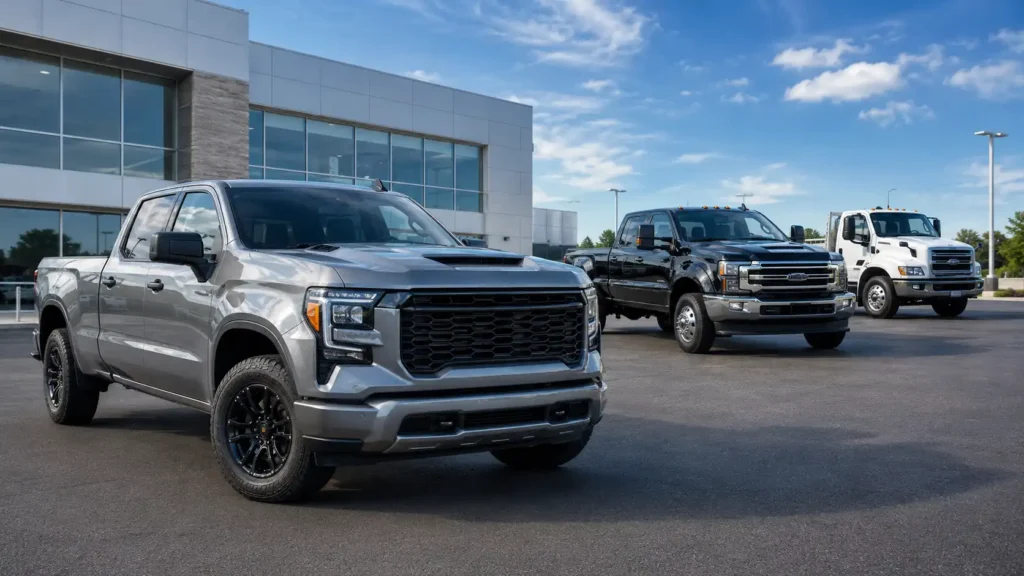
When you’re ready to expand your fleet or replace a worn-out daily driver, browsing new trucks for sale requires more than just comparing window stickers. You need to match chassis ratings, powertrain durability, and financing terms to your actual workload. I’ve spent years walking lots, reviewing build sheets, and watching buyers overpay for options they never use or under-spec a rig that breaks down by month six. This guide cuts through the dealership marketing so you can configure, finance, and drive away with a truck that actually works for your business.
Why Buy a New Truck
You’re paying a premium for predictability. A factory-fresh chassis comes with zero deferred maintenance, exact factory torque specs on every bolt, and a clean title that won’t complicate commercial insurance or resale. You get to order the exact axle ratio, bed length, and cab configuration your operation demands instead of settling for what’s sitting on a lot. Modern emissions systems and turbo components also run cleaner when they haven’t been abused by unknown previous owners. Key Takeaway: Choose new when uptime is your top priority and you need exact factory specifications without guessing maintenance history.
Best New Truck Categories
Light-duty half-tons handle daily commuting, light towing, and weekend hauling with car-like ride comfort. Three-quarter-ton and one-ton pickups step up with reinforced frames, dual rear wheels, and heavy-duty transmissions built for consistent 10,000+ pound loads. Medium-duty Class 3–6 chassis cabs and cutaways serve as the foundation for box trucks, dump bodies, and utility fleets. Heavy-duty Class 7–8 platforms require commercial licensing and specialized maintenance but deliver maximum GVWR for regional freight and heavy equipment transport. Match your payload to the lowest class that safely handles your peak weight, not the highest.
Popular Truck Brands in the USA
Ford, Chevrolet, GMC, and Ram dominate the domestic market, each offering distinct advantages for commercial buyers. Ford’s commercial fleet network and widespread parts availability make service stops predictable across most states. GM platforms consistently deliver strong aluminum-body durability and proven 10-speed transmission tuning for highway efficiency. Ram focuses on ride isolation and coil-spring rear suspensions that reduce cargo damage on rough job sites. Evaluate dealer proximity, commercial fleet manager relationships, and regional parts inventory before committing to a single brand.
Average Price Ranges
When evaluating new trucks for sale, pricing scales directly with class rating, powertrain choice, and factory unfits. Light-duty pickups typically start in the mid-$30,000 range and climb past $80,000 once you add crew cabs, four-wheel drive, and premium trims. Three-quarter and one-ton models usually land between $55,000 and $110,000 depending on dual configurations and towing packages. Medium-duty chassis cabs and vocational trucks often range from $70,000 to $150,000 before body installation. Always request an out-the-door breakdown that includes destination charges, dealer prep, and state registration fees.
Features to Compare Before Buying
Don’t just look at trim names; verify the hardware underneath. Check the rear axle ratio to ensure it matches your typical load weight and transmission gearing. Confirm alternator output meets your electrical demands, especially if you’re running inverters, plows, or auxiliary lighting. Verify up fitter switch amperage ratings and wiring harness readiness for aftermarket bodies. Look for integrated trailer brake controllers, factory tow mirrors with spotlights, and telematics ports that sync with fleet management software. Skip cosmetic packages that add weight and reduce payload without improving functionality.
Towing Capacity and Payload Basics
Payload capacity drops with every factory option you add. A leather interior, larger wheels, heavy-duty winch, and crew cab configuration all subtract from your available cargo weight before you even load the bed. Always reference the door jamb sticker for actual payload, not the marketing brochure. Towing capacity depends on your Gross Combined Weight Rating (GCWR), rear axle ratio, and whether you’re using a weight-distributing hitch. Weigh your truck empty at a certified CAT scale with all permanent equipment installed to know your true baseline before calculating safe load limits.
Diesel vs Gas for New Trucks
| Factor | Gasoline Engine | Diesel Engine |
| Upfront Cost | Lower purchase price, cheaper initial registration | Higher sticker price, often higher taxes |
| Fuel Economy | Lower MPG, better for short trips and light loads | Higher MPG, excels at sustained heavy towing |
| Maintenance | Lower routine service costs, simpler emissions systems | Higher fluid/filter costs, DEF and DPF system management |
| Longevity | Adequate for 150k–200k miles with proper care | Industry standard for 250k–400k+ miles under load |
| Resale Value | Depreciates faster, narrower commercial buyer pool | Holds value longer, strong demand from fleet buyers |
Key Takeaway: Pick gas for light-duty, lower-mileage routes where upfront cost matters most; choose diesel when you regularly tow heavy loads, run high annual mileage, and need long-term durability.
Warranty Benefits
Factory coverage protects your bottom line during the highest-risk ownership period. Bumper-to-bumper warranties typically cover electrical glitches, infotainment failures, and suspension components for three years or 36,000 miles. Powertrain coverage extends to five years or 60,000 miles, shielding you from catastrophic engine or transmission failures. Commercial warranties often mirror personal terms but exclude certain fleet-use modifications. Corrosion perforation coverage usually runs five to seven years. Always read the fine print on aftermarket upfits, as improper installation can void factory coverage on related components.
Dealer Incentives and Rebates
Manufacturers frequently offer fleet pricing, low-APR financing, and conquest cash to move inventory. End-of-model-year discounts target outgoing configurations, while regional incentives fluctuate based on local dealer stock levels. Ask your sales manager specifically about commercial fleet programs, which often provide tiered pricing based on how many units you purchase annually. Stack manufacturer rebates with dealer cash when available, but verify that incentives apply to your exact trim and powertrain combination. Never assume advertised rates apply to commercial registrations without confirming eligibility first.
Financing Options for New Trucks
Captive manufacturer lenders typically offer the most competitive rates for qualified buyers, especially during promotional periods. Commercial loans evaluate your business revenue, time in operation, and debt service coverage ratio rather than just personal credit scores. Consumer auto financing works well for owner-operators but may restrict business use or mileage caps. Expect to put 10–15% down for personal purchases, while commercial lenders often require 20% or a documented down payment to offset collateral risk. Always secure pre-approval before negotiating to lock your rate and eliminate dealer markup on financing reserves. Key Takeaway: Pre-approval turns you into a cash-equivalent buyer, giving you leverage to negotiate out-the-door pricing without financing markups.
Best Time to Buy a New Truck
Dealership inventory cycles drive pricing more than calendar months. The strongest discounts appear when manufacturers push outgoing model-year inventory to clear space for incoming chassis, typically between late summer and early fall. End-of-quarter sales targets often trigger aggressive manager approvals on pricing and trade-in values. Holiday promotional periods bundle low APR financing with cash rebates, but verify whether you must sacrifice one to get the other. Avoid buying during peak spring construction season or early winter when commercial demand spikes and inventory tightens.
Mistakes to Avoid When Buying New
- Over-specifying the trim package and losing critical payload to unnecessary luxury features
- Ignoring rear axle ratios and ending up with an under-geared drivetrain that strains under load
- Skipping the pre-delivery inspection and accepting a truck with transport damage or missing hardware
- Financing based solely on monthly payment instead of total loan cost and interest rate
- Assuming all dealer add-ons are mandatory and paying for window tint, paint protection, or nitrogen tires you don’t need
- Failing to verify commercial fleet eligibility before applying for business pricing or tax exemptions
- Ordering a truck without confirming body builder wiring harness compatibility for your planned unfit
Key Takeaway: Every dollar spent on cosmetic upgrades or dealer add-ons is a dollar subtracted from your usable payload and long-term equity.
Frequently Asked Questions
Can I order a new truck with a custom axle ratio?
Yes. Most manufacturers allow you to specify rear axle ratios during the factory build process, especially on heavy-duty and commercial chassis models.
Do commercial buyers pay sales tax on new trucks?
It depends on your state. Many jurisdictions offer sales tax exemptions for trucks used exclusively for business, agriculture, or interstate commerce.
How long does it take to factory-order a new truck?
Delivery usually takes eight to sixteen weeks, depending on chassis availability, production backlogs, and transport logistics.
Conclusion
Buying a new truck requires matching your exact operational demands to verified chassis ratings, realistic financing terms, and factory warranty coverage. Skip the impulse upgrades, verify your payload baseline, and lock your financing before you negotiate. When you’re ready to compare specific inventory, explore our complete guide to finding a truck for sale in the USA, review the long-term value differences between new vs used trucks, and decide whether it makes more financial sense to buy, rent, or lease a truck for your operation.