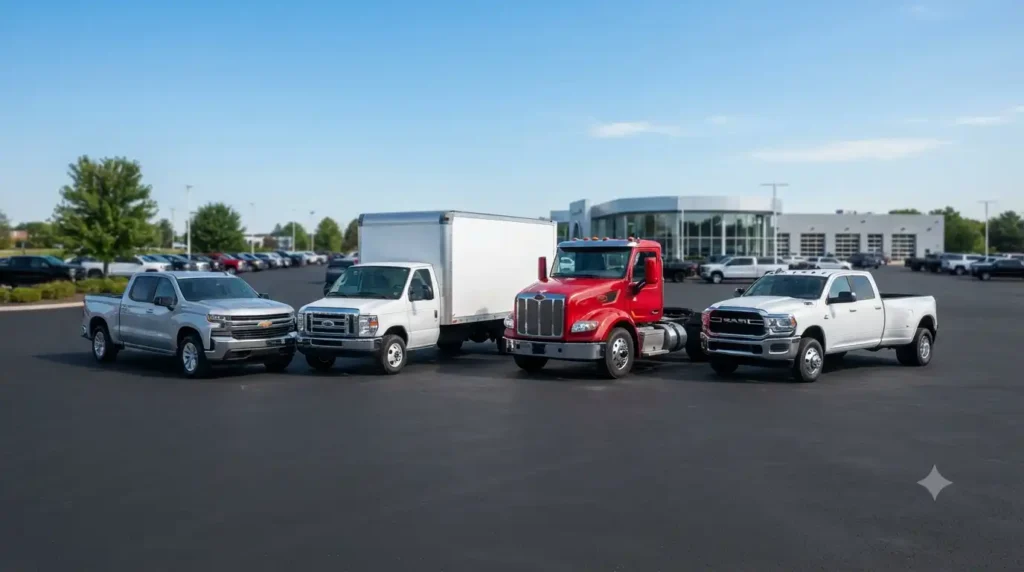
Buying a truck is not like buying a sedan. A truck is a tool, and the wrong one costs you money every single day you own it — in fuel, downtime, repairs, and jobs you can’t take because the truck can’t handle them. Whether you’re a contractor who needs a work rig, a small fleet owner scaling up, or someone who just needs a dependable hauler for the weekend, finding the right truck for sale in USA markets comes down to matching the machine to the work.
This guide walks you through every decision that matters: the truck classes you’ll actually encounter, whether new or used makes sense for your budget, how to pay for it, and exactly what to inspect before you hand over a dime. No fluff — just the stuff that keeps you from making an expensive mistake.
Understanding Truck Types Before You Shop
Before you look at a single listing, you need to know which category you’re shopping in. “Truck” covers everything from a light-duty pickup to a Class 8 semi, and the buying process, price, and even the license you need change with each one.
Pickup Trucks
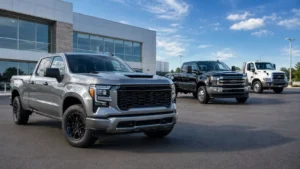
These are your light-duty, everyday trucks — half-ton, three-quarter-ton, and one-ton pickups. Think of the workhorses you see on every job site: full-size models with a bed, a cab, and enough capability to tow a trailer and haul materials. They’re the most versatile option and the easiest to resell later.
If you’re hauling landscaping gear, running a mobile service, or need something that doubles as a daily driver, a pickup is usually where you start. Pay attention to the “ton” rating — a half-ton handles light loads and comfort, while a one-ton is built for heavy towing and payload without sagging.
Work Trucks
A work truck is a pickup or chassis-cab configured for a specific job — utility bodies, service beds, flatbeds, dump inserts, or ladder racks. These are often stripped of the creature comforts (vinyl floors, base trim) and built around function.
When you shop work trucks, the upfit matters as much as the truck itself. A well-built service body from a reputable manufacturer can add years of usable life; a cheap, rusted-out utility box will nickel-and-dime you.
Commercial Trucks
Commercial trucks are built and titled for business use — box trucks, cargo vans, stake beds, and vocational trucks. They’re rated by GVWR (Gross Vehicle Weight Rating), which tells you the maximum loaded weight the truck is legally and mechanically designed to carry.
This is where fleet vehicles live. If you’re buying for a delivery operation or a growing business, you’ll care about cargo volume, door configuration, and how easy the truck is to service, because downtime on a commercial vehicle is lost revenue.
Medium-Duty Trucks
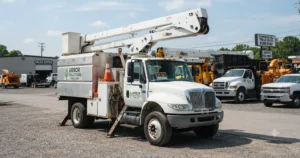
Medium-duty trucks fall into roughly Class 4 through Class 6 — bigger box trucks, larger dump trucks, tow trucks, and bucket trucks. Many require a CDL depending on the GVWR and how you use them, so check the licensing rules for your state before you buy.
These trucks typically run diesel engines built for higher mileage and heavier duty cycles. Buying medium-duty means thinking about maintenance infrastructure — you can’t always pull one into a corner quick-lube shop.
Heavy-Duty Trucks
Heavy-duty trucks are Class 7 and 8 — the big rigs, road tractors, and heavy vocational trucks. These almost always require a CDL, come with serious towing capacity, and involve a completely different maintenance and cost structure than anything lighter.
If you’re shopping here, you already know the stakes are high. Engine hours, DPF (diesel particulate filter) condition, and drivetrain health drive the value far more than looks.
Key Takeaway: Pick your truck class based on the heaviest job you’ll do regularly, not the average one — buying too small to save money means buying twice.
New vs Used Trucks: The Basics
The new-versus-used decision comes down to your budget, how you’ll use the truck, and how much risk you’re willing to absorb. Both paths make sense — for different buyers.
| Factor | New Truck | Used Truck |
| Upfront cost | Highest | Lower to moderate |
| Depreciation | Steep in first 2-3 years | Already absorbed by first owner |
| Warranty | Full factory coverage | Often expired or limited |
| Reliability | Predictable, no history to vet | Depends heavily on prior care |
| Financing rates | Usually lower | Usually higher |
| Availability of exact spec | You choose everything | You take what’s out there |
A new truck makes sense when you want a specific configuration, plan to keep it long-term, and want to avoid inheriting someone else’s neglect. If that’s your lean, browse new trucks for sale to see current models and pricing.
A used truck makes sense when you want to skip the brutal first-years depreciation and stretch your budget. A three-year-old truck with reasonable miles and good records often delivers the best value on the market see what’s available in used trucks for sale. For a deeper side-by-side, our breakdown of new vs used trucks covers long-term ownership costs in detail.
Key Takeaway: New buys you certainty; used buys you value. If you can verify a used truck’s history and condition, used usually wins on total cost of ownership.
Buying a Cheap Truck Without Getting Burned
There’s a difference between a cheap truck and a good deal. A low price usually means one of three things: high miles, deferred maintenance, or a problem the seller is trying to move before it fully surfaces.
That doesn’t mean you should avoid affordable trucks — plenty of solid, budget-friendly rigs are out there. It means you need to be sharper about what you’re looking at. Get maintenance records, run the VIN for accident and title history, and factor in the cost of the repairs the truck will inevitably need soon.
Watch for the trucks priced well below similar listings. Ask why. A fair explanation (owner upgrading, business closing, needs a specific repair the seller disclosed) is fine. A vague answer or a rushed sale is a red flag. If you’re shopping at this end of the market, our guide to cheap trucks for sale covers where to find them and how to vet them.
Key Takeaway: A cheap truck with documented history and a known repair need can be a smart buy — a cheap truck with no records and a nervous seller is a future breakdown.
Buy, Rent, or Lease: Which Makes Sense
How you acquire a truck matters as much as which truck you pick. Your cash flow, how long you’ll need it, and your tax situation all point toward different answers.
| Option | Best For | Upfront Cost | Long-Term Cost | Flexibility |
| Buy | Long-term use, high annual mileage | High (or financed) | Lowest over time | You own it, sell anytime |
| Lease | Predictable payments, newer trucks every few years | Low to moderate | Higher over time | Mileage/wear limits apply |
| Rent | Short-term jobs, seasonal spikes, one-off hauls | Lowest per use | Highest per day | Maximum — return when done |
Buying wins when you’ll run the truck hard for years and want to build equity in the asset. Leasing fits businesses that want newer equipment, predictable monthly costs, and possible tax advantages without a huge cash outlay. Renting is for when the need is temporary — a seasonal rush, a single project, or covering a truck that’s in the shop.
For a full financial breakdown with real scenarios, see our guide on how to buy, rent, or lease a truck.
Key Takeaway: Buy if you’ll use it for years, lease if you value newer trucks and steady payments, and rent if the need is short-term — don’t finance a long-term truck for a short-term job.
Truck Financing Basics
Unless you’re paying cash, financing shapes what you can actually afford. Lenders look at your credit score, down payment, the truck’s age and mileage, and — for commercial trucks — your business financials.
A few things to understand before you sign:
- Down payment: More money down lowers your monthly payment and your total interest. For used commercial trucks, expect lenders to want more down than on a new one.
- Term length: Longer terms mean smaller payments but more interest paid overall — and you risk owing more than the truck is worth (being “upside down”).
- Interest rate: Rates run higher on older, higher-mileage trucks because they’re riskier collateral. New trucks and strong credit get you the best rates.
- Commercial vs. personal financing: Buying through a business opens up equipment financing and potential tax deductions, but the paperwork and approval bar are different from a personal auto loan.
Get pre-approved before you shop. Walking onto a lot or into a negotiation knowing your rate and budget puts you in control and keeps you from being sold on a payment instead of a price.
Key Takeaway: Negotiate the truck’s price and the financing separately — sellers who bury a bad price inside a “great monthly payment” are counting on you not doing the math.
What to Check Before You Buy
This is where deals are won or lost. Whether it’s new or used, walk through the truck deliberately — don’t let a friendly seller rush you.
For any truck, cold-start it yourself. A truck that’s already warmed up when you arrive can be hiding a hard cold-start, blue startup smoke, or a noisy lifter. Here’s what to actually look for:
- Engine: Check for oil seepage around the valve cover gaskets and the front and rear main seals. Pull the dipstick — milky or foamy oil means coolant intrusion. Listen at idle for a ticking lifter or a knock, and watch the exhaust: blue smoke is burning oil, white smoke that doesn’t clear is coolant.
- Transmission: On an automatic, feel for harsh or delayed shifts and check the fluid — it should be clean, not brown or burnt-smelling. On a manual, feel for a slipping clutch under load and grinding between gears.
- Frame and undercarriage: Look for surface rust versus structural rust. Flaking scale on the frame rails, especially near the crossmembers and suspension mounts, is a walk-away. Check for fresh undercoating that might be hiding rot.
- Fluids and leaks: Look under the truck after it’s run for a few minutes. Spot the color of any drips — red is transmission or power steering, green or orange is coolant, dark brown is oil.
- Tires and brakes: Uneven tire wear points to alignment or suspension problems. Check that all tires match and note the tread depth. Ask when the brakes were last done.
- Records and VIN: Get the maintenance history in writing and run the VIN for accident, title, and odometer-rollback red flags.
For medium- and heavy-duty diesels specifically, ask about the DPF and EGR system service history — emissions system repairs get expensive fast, and a truck that’s been “deleted” or has recurring regen problems can become a money pit.
Key Takeaway: If a seller won’t let you cold-start the truck, take it to a mechanic, or see the maintenance records — walk away. Honest sellers welcome scrutiny.
Where to Buy Trucks in the USA
You’ve got several channels, and each has trade-offs.
- Franchise dealerships: Best for new trucks and certified pre-owned. You get warranties, financing, and reconditioned vehicles — but you pay a premium for it.
- Independent used-truck dealers: Wider selection of used and commercial trucks, often more room to negotiate. Vet the dealer’s reputation and reviews before you trust their reconditioning.
- Online marketplaces: Huge inventory and easy price comparison across the country. The catch is you often can’t inspect in person, so factor in an inspection or shipping cost.
- Private sellers: Usually the lowest prices, since there’s no dealer markup. But there’s no warranty, no financing help, and the burden of vetting the truck falls entirely on you.
- Auctions and fleet sales: Where dealers and savvy buyers find deals on off-lease and fleet vehicles. Great value, but you’re often buying with limited inspection and no recourse — for experienced buyers only.
Match the channel to your comfort level. If you want protection and simplicity, buy from a reputable dealer. If you want the lowest price and you know how to inspect a truck, private and auction sales reward that knowledge.
Common Truck Buying Mistakes
These are the errors that cost buyers the most — and they’re all avoidable.
- Buying on emotion. Falling for a truck’s looks or a clean paint job while ignoring what’s underneath.
- Under-buying to save money. Getting a half-ton when the job needs a three-quarter-ton, then wearing the truck out early.
- Skipping the pre-purchase inspection. A few hundred dollars for a mechanic’s inspection can save you thousands.
- Financing on payment, not price. Letting a seller stretch the term to hide an inflated price.
- Ignoring total cost of ownership. Fuel, insurance, maintenance, and repairs matter more than the sticker over the truck’s life.
- Not verifying the history. Skipping the VIN check and taking the seller’s word on accidents, mileage, and maintenance.
Key Takeaway: Almost every expensive truck-buying mistake traces back to rushing. Slow down, verify everything, and be willing to walk away.
Final Truck Buyer Checklist
Run through this before you commit to any truck:
- Confirm the truck class and capability match your heaviest regular job.
- Decide new vs. used based on budget and how you’ll use it.
- Get pre-approved for financing and know your true budget.
- Run the VIN for accident, title, and odometer history.
- Get the full maintenance records in writing.
- Cold-start the truck yourself and watch the exhaust.
- Inspect the engine, transmission, frame, fluids, tires, and brakes.
- For diesels, verify emissions-system service history.
- Get a pre-purchase inspection from an independent mechanic.
- Negotiate the price and the financing separately.
- Confirm the total cost of ownership, not just the purchase price.
- Verify the title is clean and in the seller’s name before you pay.
Frequently Asked Questions
How many miles is too many on a used truck?
It depends more on maintenance than the number — a well-documented high-mileage diesel often beats a neglected low-mileage gas truck.
Should I buy a diesel or gas truck?
Choose diesel for heavy towing, high mileage, and longevity; choose gas for lighter use and lower upfront and maintenance costs.
Do I need a CDL to buy a truck?
No — you can buy any truck without a CDL, but you’ll need the proper license to legally drive heavier trucks over certain weight ratings.
Is it cheaper to buy from a dealer or a private seller?
Private sellers are usually cheaper, but dealers offer warranties, financing, and reconditioned trucks — you’re paying for peace of mind.
How much should I put down on a truck?
More is better, a larger down payment lowers your monthly payment, cuts total interest, and helps you avoid owing more than the truck is worth.
Conclusion
The right truck comes down to one core decision: matching the machine and the way you pay for it to the work you’ll actually do. Nail the truck class, verify the condition, and choose the financing path that fits your cash flow, and you’ll avoid the mistakes that cost other buyers thousands. Take your time, inspect everything, and never let a seller rush you.
Ready to start shopping? Browse our current new trucks for sale and used trucks for sale, compare your options with our new vs used trucks guide, and if you’re still deciding how to acquire one, see whether it’s smarter to buy, rent, or lease a truck for your situation.